Milk proteins
Casein, caseinate, whey, whey protein, milk solids, curds, lactalbumin, and lactoglobulin matter when the saved rule avoids milk protein rather than lactose alone.
Dairy-free shopping is not the same as vegan shopping, and it often depends on how strictly a household avoids milk ingredients. IngrediCheck helps you scan packaged foods against saved dairy-free rules, then review whey, casein, ghee, lactose, and precautionary milk statements before buying.
Quick answer
A dairy-free ingredient checker should flag milk, whey, casein, butter, cream, ghee, cheese, and less obvious milk derivatives while keeping milk allergy and lactose intolerance rules distinct. IngrediCheck screens the declared label; it cannot certify a product free from milk protein or cross-contact.
What It Catches
Workflow
Read the label
Casein, caseinate, whey, whey protein, milk solids, curds, lactalbumin, and lactoglobulin matter when the saved rule avoids milk protein rather than lactose alone.
Butter, butterfat, cream, ghee, cheese powder, cultured milk, and some flavor systems can conflict with dairy-free rules even when the product is marketed for another dietary goal.
Non-dairy, lactose-free, plant-based, and vegan claims answer different questions. Read the ingredient and allergen statements to see whether the claim matches the household's actual dairy rule.
Decision boundary
The scan can show declared milk terms and precautionary language, but it cannot verify factory controls or decide whether lactose, milk protein, or shared-equipment risk is acceptable for a specific person. Allergy decisions require clinician guidance; uncertain sourcing requires manufacturer confirmation.
Detailed label guide
Start with direct milk terms, then expand the review to the ingredient family. Milk, cream, butter, cheese, yogurt, curds, whey, casein, and caseinates are common matches, but packaged foods may also declare lactalbumin, lactoglobulin, milk solids, nonfat dry milk, milk protein concentrate, milk protein hydrolysates, butterfat, ghee, nougat, or cultured milk ingredients. A useful scanner names the exact term and explains that it is milk-derived instead of assuming the shopper will remember every alias.
Read the complete current package even when the brand and front claim are familiar. Milk must be declared when it is intentionally used as a major allergen in covered United States packaged foods, but the formulation can still change and an imported or restaurant-style label may follow a different convention. Compare the ingredient list with the Contains statement, and never treat a missing precautionary statement as proof that cross-contact is impossible. If the barcode record and package disagree, the package is the evidence to review.
Front labels are screening clues, not interchangeable guarantees. Dairy-free, non-dairy, lactose-free, plant-based, and vegan describe different product attributes and may be governed or used differently. A product marketed as lactose-free can still contain milk protein; a non-dairy product can still require careful ingredient review; and a dairy-free product does not automatically satisfy a vegan rule. Use the claim to narrow the shelf, then let the actual ingredient and allergen declarations control the label check.
Dairy-free shopping can represent several different decisions. A person with a diagnosed milk allergy may need to avoid milk proteins and follow a clinician's cross-contact plan. Someone with lactose intolerance may focus on lactose amount and personal tolerance while still consuming some milk-derived foods. Another shopper may avoid dairy as a household preference. Save those rules separately so the app does not turn one person's exception into a universal approval or apply an allergy-level warning to every preference-based scan.
Multiple profiles are especially useful for families. One child may need whey, casein, ghee, and precautionary milk wording surfaced for strict review, while another family member may only want products marketed without dairy. Show which saved rule produced the result, review direct ingredient matches before ambiguous claims, and keep the final decision attached to the person who will eat the food. A generic health score cannot represent those differences because it answers a nutrition question rather than the household's ingredient rule.
Menu and online-shopping scans have an additional limit: the available text may be incomplete. A filter marked no dairy may omit sub-ingredients, supplier changes, shared preparation details, or the distinction between lactose and milk protein. Use it to shortlist products, then inspect the full packaged-food declaration or ask the restaurant or manufacturer a focused question. When the evidence is incomplete, needs review is more honest than converting a marketing filter into a safety guarantee.
Reformulation is a routine shopping risk, not an edge case. Rescan when the package design, size, country, claim, ingredient order, allergen statement, or manufacturer changes. Familiar crackers can add whey, chocolate can move between shared lines, and a sauce can replace one flavor or protein ingredient with another. A saved result or previous purchase can speed up retrieval, but neither should override the current package. Review the declaration every time when the consequence of a mismatch is significant.
Keep intentionally added ingredients and possible cross-contact as two visible layers. The ingredient list and Contains statement identify declared milk ingredients; may contain and shared-equipment language can inform a separate risk decision but is voluntary and does not describe a standardized exposure level. IngrediCheck can surface those words and the rule they match. It cannot inspect sanitation, supplier controls, unlabeled cross-contact, or whether a product fits the emergency and avoidance plan provided for a person with milk allergy.
When a source is ambiguous, ask a narrow question rather than guessing. Confirm whether a flavor, culture, protein, or processing aid is milk-derived; whether the current product shares equipment; and whether the answer applies to the exact size and market being purchased. If the maker cannot resolve the question, choose a product with clearer evidence. This manual-review path is part of a good scanner workflow: obvious conflicts are removed quickly, ordinary matches are explained, and the few products that require manufacturer or clinician input remain explicitly unresolved.
Related Scanner Paths
Egg-Free Ingredient Checker App
Scan labels for egg, albumin, lysozyme, ovalbumin, mayonnaise, and household allergy rules with IngrediCheck's egg-free checker.
AIP Ingredient Checker App
Scan packaged foods against AIP-style saved rules for grains, legumes, dairy, nightshades, seeds, and additives with IngrediCheck.
Alpha-Gal Ingredient Checker App
Scan labels for alpha-gal shopping rules, gelatin, lard, broth, dairy clues, and mammalian-source ingredients with IngrediCheck.
Lecithin
Lecithin is a broad label term for phospholipid-rich emulsifiers used in chocolate, baked goods, dressings, infant foods, and supplements. The source can be soy, sunflower, egg, or less commonly animal tissue.
Carrageenan
Carrageenan is a seaweed-derived thickener used in dairy alternatives, chocolate milk, deli meat, whipped toppings, and desserts. It is useful in manufacturing because it helps liquids stay smooth and suspended.
Xanthan gum
Xanthan gum is a fermentation-derived thickener that shows up in gluten-free baking, sauces, dressings, and frozen desserts. It is often the ingredient that gives wheat-free products enough structure to hold together.
Label Clues
emulsifier
Lecithin: what it does in food, current safety notes, diet compatibility, and shopper guidance from IngrediCheck.
thickener
Carrageenan: what it does in food, current safety notes, diet compatibility, and shopper guidance from IngrediCheck.
thickener
Xanthan gum: what it does in food, current safety notes, diet compatibility, and shopper guidance from IngrediCheck.
Related Guides
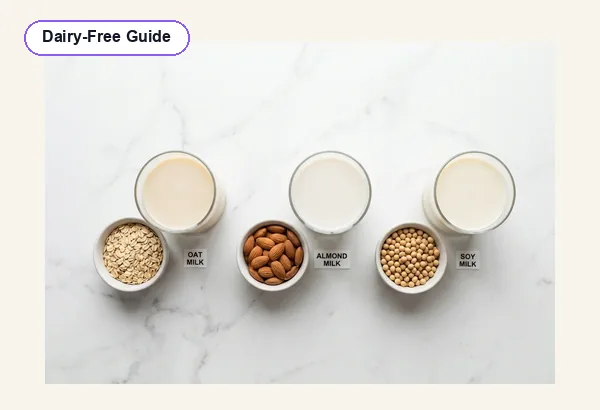
Mar 18, 2026 | 10 min read
Dairy hides under dozens of names on food labels — and even 'non-dairy' products can legally contain milk proteins. Learn to spot hidden dairy, make smart swaps, and protect your nutrition when going dairy-free.
Apr 21, 2026 | 8 min read
A practical guide to checking packaged foods against your own allergies, diets, and ingredient preferences, instead of relying on a generic food score.
Apr 13, 2026 | 8 min read
A food allergy scanner app or food allergen checker helps families catch allergens, ingredient derivatives, and label risks faster than manual label reading. Here's what to look for and how IngrediCheck works.
FAQ
No. IngrediCheck can help screen labels faster, but diagnosed milk allergy management still depends on the full label, precautionary statements, manufacturer controls, and clinician guidance.
Not necessarily. A product can avoid milk ingredients while still containing eggs, honey, gelatin, or other animal-derived ingredients, so dairy-free and vegan rules should be checked separately.
Whey, casein, caseinates, lactose, milk solids, milk protein hydrolysates, lactalbumin, lactoglobulin, butterfat, and ghee are common label terms worth reviewing.
Scan labels, see what fits your food notes, and read the why in plain English.