Label Reading Guides

Food Allergy Scanner App: Scan Labels Faster and Shop Safer

A food allergy scanner app or food allergen checker helps families catch allergens, ingredient derivatives, and label risks faster than manual label reading. Here's what to look for and how IngrediCheck works.

Apr 13, 2026|8 min read
By Sanket Patel|Updated 2026-05-01|5 sources|Editorial standards
Food Allergy Scanner App: Scan Labels Faster and Shop Safer

If food allergies are part of your household, grocery shopping rarely feels routine. Every new snack, frozen dinner, protein bar, or imported sauce comes with a second job: reading the label carefully enough to catch what could hurt someone you love.

A good food allergy scanner app, food allergen scanner, or allergen checker exists for exactly that moment. It helps you move faster, reduce label-reading mistakes, and check the same product against multiple family needs without doing the mental work from scratch every time.

This article is for informational purposes only and should not be considered medical advice. If you or your child has a diagnosed food allergy, follow your allergist's guidance and emergency action plan.

Why Families Still Need Help Even When Allergens Are "Labeled"

In the United States, FALCPA and current FDA food allergy rules require packaged foods to declare the major allergens clearly. Today that means the Big 9: milk, egg, fish, crustacean shellfish, tree nuts, peanuts, wheat, soy, and sesame.

That legal protection matters. But it does not make shopping easy in real life.

The hard part is that families are not only asking, "Is peanut listed?" They are also asking:

  • Did this product change its formula since last month?
  • Is this ingredient another name for something we avoid?
  • Is a "may contain" statement a serious warning or vague legal padding?
  • Does this product work for one child, but not for another person in the same house?
  • Is this imported product using naming or formatting that is less familiar to me?

Even when labels are compliant, they still require interpretation. And interpretation is where rushed shopping trips go wrong.

Where Manual Label Reading Breaks Down

Most mistakes do not happen because families are careless. They happen because labels demand a level of focus that is unrealistic in a real grocery aisle.

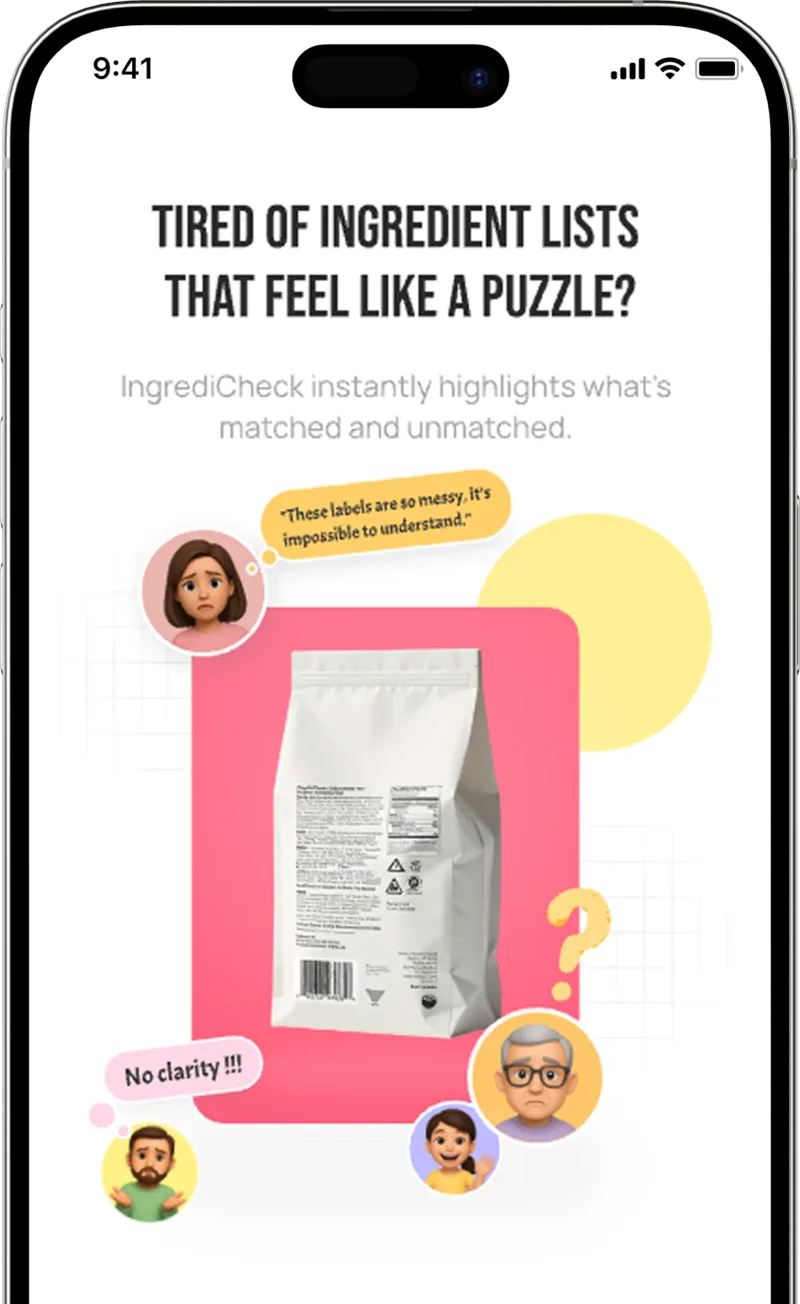
You may be shopping with children, comparing prices, answering texts, or trying to finish the trip in 20 minutes. Now add tiny type, long ingredient panels, specialty ingredients, and voluntary cross-contact warnings that are not standardized across manufacturers.

The FDA's current allergen labeling guidance makes one thing clear: major allergens must be declared, but firms may also use additional voluntary statements about allergen information. In practice, that means shoppers still face a mixed label environment where the legal minimum and the practical risk signal are not always the same thing.

Common friction points include:

  • Derivative ingredients. Terms like casein, whey, albumin, tahini, or arachis oil are not always obvious at a glance.
  • Voluntary advisory warnings. "May contain," "shared equipment," and "made in a facility" language is still inconsistent.
  • Product reformulations. A food that was safe last month may not be safe now.
  • Multi-person households. One product may be fine for a parent but unsafe for a child, sibling, or partner.
  • International products. Imported foods can use different naming conventions, formatting, or allergen emphasis rules.

This is exactly the kind of repetitive, detail-heavy work that scanning tools are good at.

What a Food Allergy Scanner App Should Actually Do

Not every scanner app is equally useful. A real food allergy tool should do more than flash a generic warning.

At minimum, it should:

  • recognize major allergens and common derivatives quickly
  • work from both barcodes and ingredient-label photos
  • support separate profiles for different people in the same household
  • explain why a product was flagged instead of returning a vague red alert
  • help you review ingredient lists faster, not replace judgment entirely

That last point matters. No scanner should train families to stop thinking. The best ones reduce friction while still making the label easier to review with context.

Why Barcode Scanning Helps

Barcode scanning is the fastest entry point because it removes the first layer of effort: finding, focusing, and reading the label manually. Instead of squinting at a package, you scan once and get a structured view of what matters.

That is especially useful when:

  • the ingredient list is long
  • the package design makes the label hard to read
  • you are checking several similar products side by side
  • you are shopping for more than one allergy profile

For repeat purchases, barcode scanning also makes re-checking easier. That matters because allergen safety is not a one-time decision. Formulas change. Suppliers change. Seasonal versions show up. Families need a method they can repeat every trip without fatigue.

Why Ingredient-Label Scanning Matters Too

Barcodes are useful, but they are not enough on their own. Some store-brand products, imported goods, deli items, farmers market finds, or newly launched products may not be easy to identify from barcode data alone.

That is why ingredient-label scanning matters. A strong app should also let you point the camera at the ingredient panel or upload a label photo, then analyze the text directly.

This solves a different set of problems:

  • missing or unfamiliar barcodes
  • hand-carried products from other countries
  • products with updated packaging but old database entries
  • situations where you want to confirm the ingredient list yourself

For allergy management, barcode plus label-text scanning is the practical combination. One is fast. The other is flexible. Together, they cover more real shopping situations.

Built for Real Family Shopping, Not Ideal Conditions

The biggest advantage of a food allergy scanner app is not technical. It is household-level clarity.

Many families are not managing one simple avoid list. They are managing combinations like:

  • a child with peanut allergy
  • another child with dairy intolerance
  • a parent avoiding soy
  • a household that wants to screen for multiple concerns at once

Without a system, that means re-reading the same ingredient list through multiple mental filters. That is slow, exhausting, and easy to mess up.

With saved family profiles, you scan once and evaluate the product against everyone who matters. That turns a repetitive, error-prone label check into a consistent routine.

How IngrediCheck Helps

IngrediCheck is built for exactly this use case. You can scan a barcode or ingredient label, compare the product against saved food notes for each person in your household, and get a clear result in plain English.

The flow is simple:

  1. Scan the barcode or ingredient label.
  2. IngrediCheck reads the label and checks it against each saved profile.
  3. You see Match, Not a match, or Needs review, with the why spelled out clearly.

That matters because families do not only need raw ingredient data. They need a usable decision in the moment they are holding the product.

IngrediCheck is especially useful when you want to:

  • catch major allergens quickly
  • surface ingredient names that are easy to overlook
  • compare one product against multiple people in the household
  • reduce the mental overhead of every grocery trip
  • make faster decisions without abandoning label review entirely

Why Not Just Read the Label Yourself?

You still should. But there is a difference between reading the label and doing all the interpretation manually every time.

The strongest allergy routine is not blind trust in an app. It is using a scanner to surface the risky parts fast, then confirming what you need to confirm. That approach is faster than manual-only shopping and safer than relying on front-of-pack claims or memory.

In other words:

  • manual reading alone is slow and mentally expensive
  • blind trust alone is not enough
  • scanned context plus human review is the practical middle ground

That is the workflow most real families actually need.

For the broader scanner cluster, compare this page with the general ingredient checker app guide, open the dedicated food allergy ingredient scanner workflow, and browse the full ingredient checker and food scanner guides hub to compare allergy, intolerance, and diet-specific label workflows in one place.

If you are buying home-kitchen or farmers-market foods without a retail barcode, use the cottage food labels and major allergens guide to understand where state cottage-food labels help and where direct producer questions still matter.

Try It on Your Next Grocery Run

The best time to understand whether a food allergy scanner app helps is not after a reaction or a near miss. It is during an ordinary shopping trip, when speed and clarity matter most.

Using IngrediCheck, you can scan your next grocery item, compare it against your household's food notes, and get a clearer answer in seconds. For families managing food allergies, that is not just convenience. It is a better system for making safer choices consistently.

Frequently Asked Questions

What does a food allergy scanner app check?

A food allergy scanner app checks ingredient lists, allergen statements, and saved household rules for major allergens, derivatives, and label clues that deserve review.

Is a food allergen scanner enough for serious allergies?

No. A scanner can reduce missed label clues, but serious allergy management still requires reading the package, following an allergist's plan, and treating uncertain cross-contact language carefully.

Can IngrediCheck handle different allergies in one family?

Yes. IngrediCheck is built around saved food notes and profiles, so one scan can be reviewed against different people with different allergy or avoidance rules.

Get the app for clearer label decisions.

Scan labels, see what fits your food notes, and read the why in plain English.

IngrediCheck app