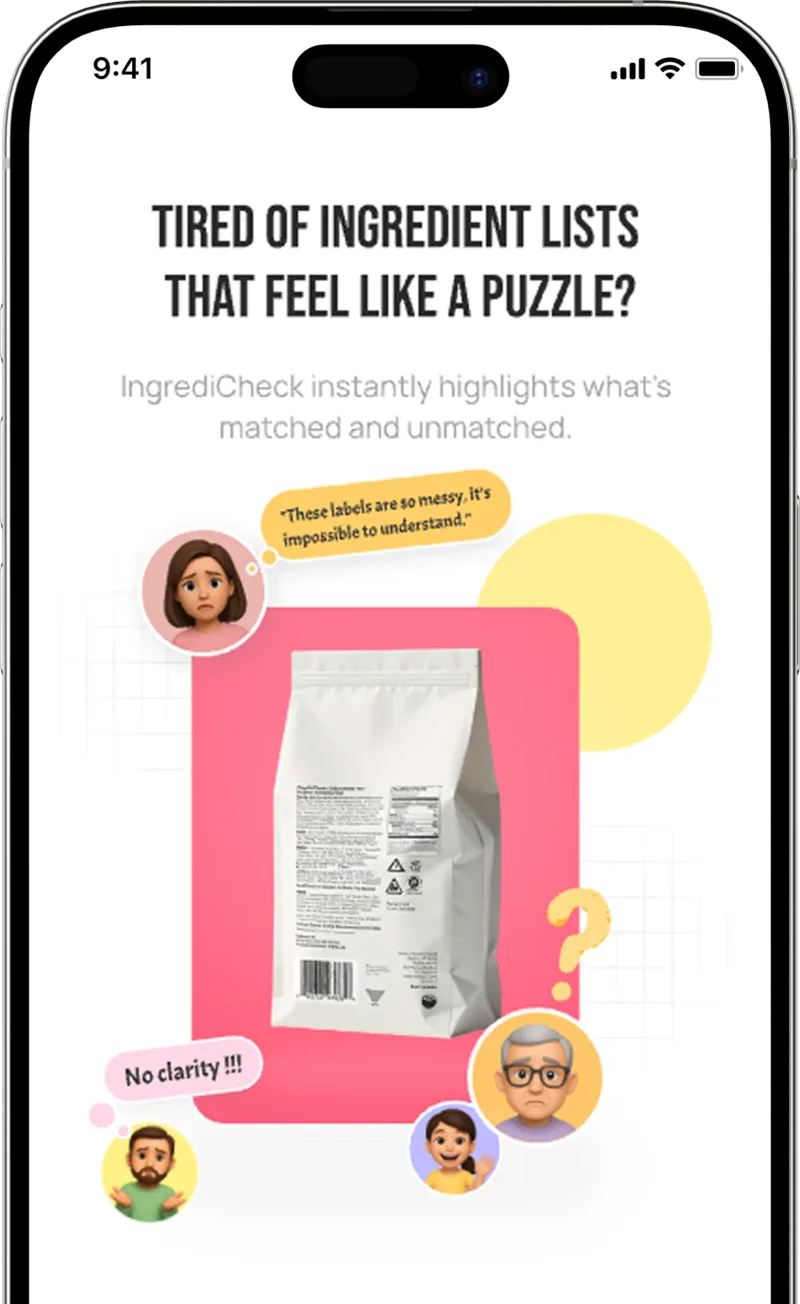
Meat, poultry, and broth
Beef, pork, chicken, turkey, lard, tallow, meat stock, bone broth, and animal fat are clearer non-pescatarian signals than generic flavor or enzyme terms.
Pescatarian shopping sits between vegetarian and broader animal-source label review. IngrediCheck helps you scan packaged foods against saved pescatarian rules, flag meat, gelatin, lard, animal broth, rennet, and source-dependent additives, and keep fish or shellfish preferences separate from vegetarian, vegan, or allergy rules.
Quick answer
A pescatarian ingredient checker should flag mammalian and poultry ingredients while allowing the fish or seafood choices defined in your saved rule. IngrediCheck also surfaces gelatin, broth, rennet, animal fats, and uncertain additives without confusing a diet preference with fish or shellfish allergy safety.
What It Catches
Workflow
Read the label
Beef, pork, chicken, turkey, lard, tallow, meat stock, bone broth, and animal fat are clearer non-pescatarian signals than generic flavor or enzyme terms.
Gelatin, rennet, glycerin, mono- and diglycerides, enzymes, stearates, and natural flavors can require source confirmation when the label does not name an animal.
Pescatarian rules may include fish and shellfish, while an allergy profile may exclude one or both. Keep those checks separate so a diet match never overrides an allergen warning.
Decision boundary
IngrediCheck can apply the pescatarian and allergy profiles you save and explain declared matches. It cannot uncover private additive sources or make seafood safe for someone with an allergy. Confirm ambiguous ingredients and follow clinician guidance for allergen decisions.
Related Scanner Paths
Check Foreign Food Labels Against Your Food Notes
Use IngrediCheck to photograph some foreign food labels, review available ingredient information, and check it against saved Food Notes while traveling.
Halal Ingredient Checker App
Review food labels for halal shopping rules, pork-derived ingredients, alcohol, gelatin, and source-dependent additives with IngrediCheck.
Kosher Ingredient Checker App
Review labels for kosher shopping rules, dairy or pareve clues, glycerin, gelatin, flavors, and certification signals with IngrediCheck.
Lecithin
Lecithin is a broad label term for phospholipid-rich emulsifiers used in chocolate, baked goods, dressings, infant foods, and supplements. The source can be soy, sunflower, egg, or less commonly animal tissue.
MSG
MSG is a flavor enhancer used in savory packaged foods such as soups, noodles, snacks, and seasoning systems. It matters because it remains legally accepted by mainstream regulators while still carrying unusually strong cultural baggage in clean-label and retailer discussions.
Calcium propionate
Calcium propionate is a mold-inhibiting preservative commonly used in bread, buns, tortillas, and other packaged baked goods. It matters because it sits at the center of a real shelf-life tradeoff between softer bread products and simpler ingredient decks.
Label Clues
emulsifier
Lecithin: what it does in food, current safety notes, diet compatibility, and shopper guidance from IngrediCheck.
additive
MSG: what it does in food, current safety notes, diet compatibility, and shopper guidance from IngrediCheck.
preservative
Calcium propionate: what it does in food, current safety notes, diet compatibility, and shopper guidance from IngrediCheck.
Related Guides
Apr 22, 2026 | 9 min read
Gelatin, rennet, enzymes, and other source-dependent ingredients can fit one diet but not another. Use this decision guide to interpret the label and know when the package cannot settle the question.
Apr 21, 2026 | 8 min read
A practical guide to checking packaged foods against your own allergies, diets, and ingredient preferences, instead of relying on a generic food score.

Apr 13, 2026 | 8 min read
A vegan ingredient checker app helps shoppers scan barcodes or ingredient lists, catch hidden animal-derived ingredients like casein, gelatin, whey, shellac, and carmine, and review labels faster.
FAQ
No. A scanner can flag common meat-derived and source-dependent terms, but processing aids, flavor sourcing, and manufacturer details may still require manual confirmation.
No. Pescatarian rules usually allow fish or seafood while vegetarian rules do not, so the saved rule should reflect the shopper's actual practice.
Keep those rules separate. A pescatarian preference does not replace allergen review, and allergy decisions should still follow the full label, precautionary statements, and clinician guidance.
Scan labels, see what fits your food notes, and read the why in plain English.