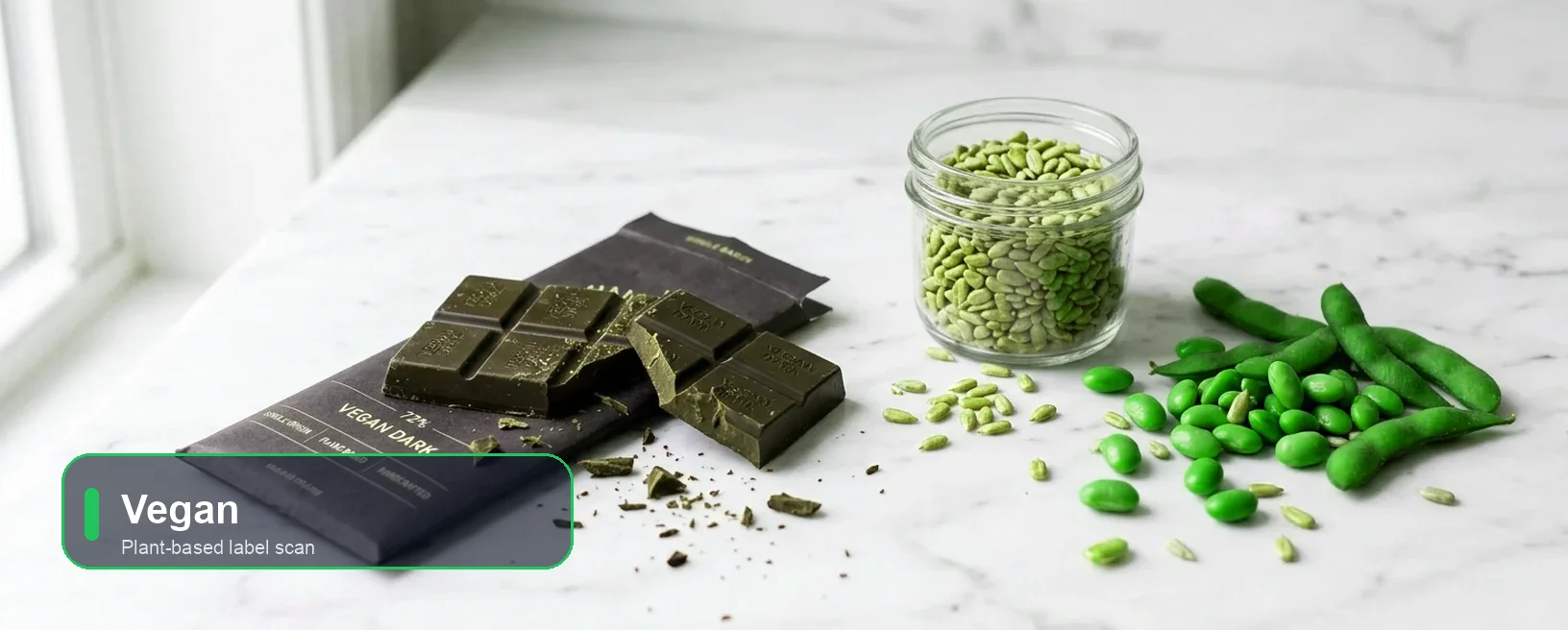
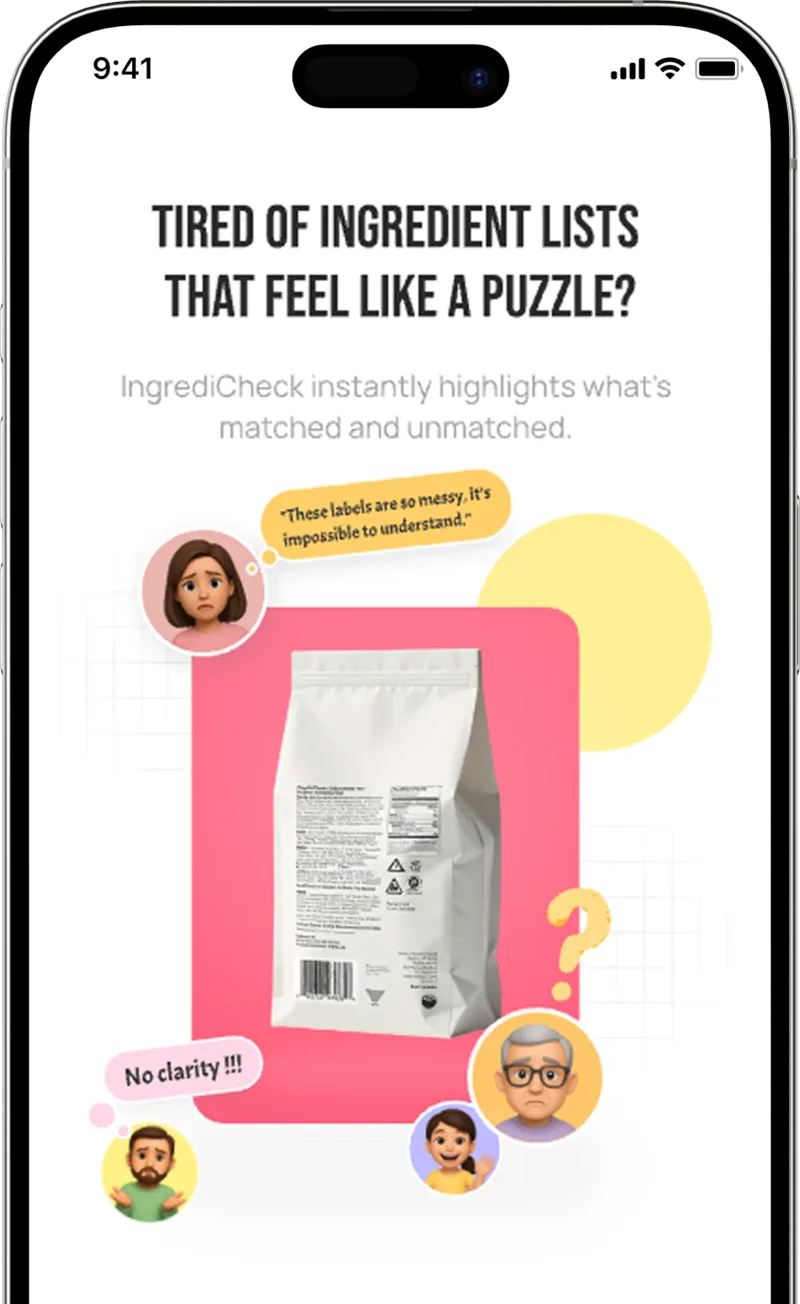
Need a vegan ingredient checker app or vegan checker? If you are asking "is this vegan?" or "are these ingredients vegan?", IngrediCheck helps you scan a barcode or ingredient list and flag hidden animal-derived ingredients like casein, gelatin, whey, shellac, and carmine faster than manual label reading.
Instead of decoding every additive yourself, you get a plain-English explanation of what looks vegan, what does not, and what may need a second review.
Ready to check a product now? Open the dedicated vegan ingredient checker workflow to scan an ingredient list and review vegan, non-vegan, and ambiguous label clues.
That matters because packaged foods often use technical ingredient names, additive codes, or broad terms that do not immediately tell you whether something came from a plant, an animal, or either one.
This article is for informational purposes only and should not be considered medical advice. If you also manage food allergies, always check allergen information separately from vegan suitability.
Why Vegan Labels Still Require Work
The Vegan Society's Vegan Trademark standards are clear: a certified vegan product must exclude animal ingredients and animal-derived substances, and the standards go beyond a simple self-declared front-of-pack claim.
The problem for shoppers is that not every product uses third-party vegan certification, and not every ingredient name is transparent.
That means everyday shopping still involves questions like:
- Is this ingredient obviously animal-derived, or just unfamiliar?
- Is this additive plant-based, animal-based, or variable by source?
- Does "plant-based" actually mean fully vegan?
- Is a product free of animal ingredients even if the front label does not say so?
The Vegan Society also notes that there is no binding legal definition for "vegan" on product labels in many markets. In practice, that means shoppers still need a way to interpret ingredient lists rather than trusting marketing language alone.
How IngrediCheck Helps
IngrediCheck is built for exactly that kind of label interpretation.
The flow is simple:
- Scan the ingredient label.
- IngrediCheck checks the list for animal-derived ingredients and ambiguous terms.
- You get a clearer result in plain English, so you know what looks vegan, what does not, and what may need a second review.
That is especially useful when:
- a product has a long additive-heavy label
- you are comparing several packaged foods quickly
- you want help identifying unfamiliar ingredient names
- you are shopping for vegan and vegetarian preferences at the same time
If your saved rule is vegetarian rather than fully vegan, start with the dedicated vegetarian ingredient checker workflow. It keeps gelatin, animal rennet, fish-derived additives, and broth ambiguity separate from stricter vegan checks, so the scan matches the label question you actually have.
The goal is not to stop reading labels. It is to reduce the amount of memorization and decoding you have to do from scratch every time.
Why Vegan Certification Still Matters
One of the smartest shortcuts in vegan shopping is still third-party certification. The Vegan Society's Vegan Trademark remains one of the clearest signals that a product has been checked against a consistent standard.
That matters because self-declared labels vary. A package may say "plant-based" and still leave unanswered questions about additives, processing, or ingredient sourcing. Certification does not eliminate the value of label reading, but it reduces ambiguity considerably.
A practical workflow looks like this:
- look for trusted vegan certification when it is available
- scan the ingredient list when it is not
- treat ambiguous terms as a prompt for closer review, not blind trust
That combination is faster and more reliable than trying to rely on marketing language or memory alone.
For the broader scanner cluster, compare this page with the general guide to checking ingredients in food, open the dedicated vegan ingredient checker workflow, and browse the full ingredient checker and food scanner guides hub to compare vegan, vegetarian, allergy, and other saved-rule workflows in one place.
Start Scanning with More Confidence
You should not need to memorize every hidden milk protein, animal-derived glazing agent, or ambiguous emulsifier before you can buy a snack, sauce, or supplement with confidence.
With a vegan ingredient checker app, the first pass gets easier. You scan the label, surface the ingredients that matter, and make a more informed decision without translating every technical term manually. For vegan shoppers, that means less guesswork and a faster route to choices that fit your values.