Food Policy Watch

FDA Food Dye Phase-Out Tracker: Brand Pledges and Deadlines

Track FDA food dye phase-out actions and company pledges, distinguish voluntary targets from revocations, and check reformulated labels.

Jun 30, 2026|9 min read
By Sanket Patel|Updated 2026-07-29|6 sources|Editorial standards
FDA Food Dye Phase-Out Tracker: Brand Pledges and Deadlines

Food companies and retailers are reformulating products with different color additives, but the U.S. transition does not run on one binding deadline.

The FDA is working with industry to eliminate six commonly used certified colors by the end of 2027. It has separate regulatory actions for Red 3, Orange B, and Citrus Red No. 2. Company pledges remain product-specific and can finish on different dates.

This tracker separates those lanes and summarizes selected company commitments the FDA lists as complete or in progress. It was checked on July 29, 2026 against the FDA page whose content is current as of June 16, 2026.

Which Dyes Are in Each Regulatory Lane

Which Dyes Are in Each Regulatory Lane

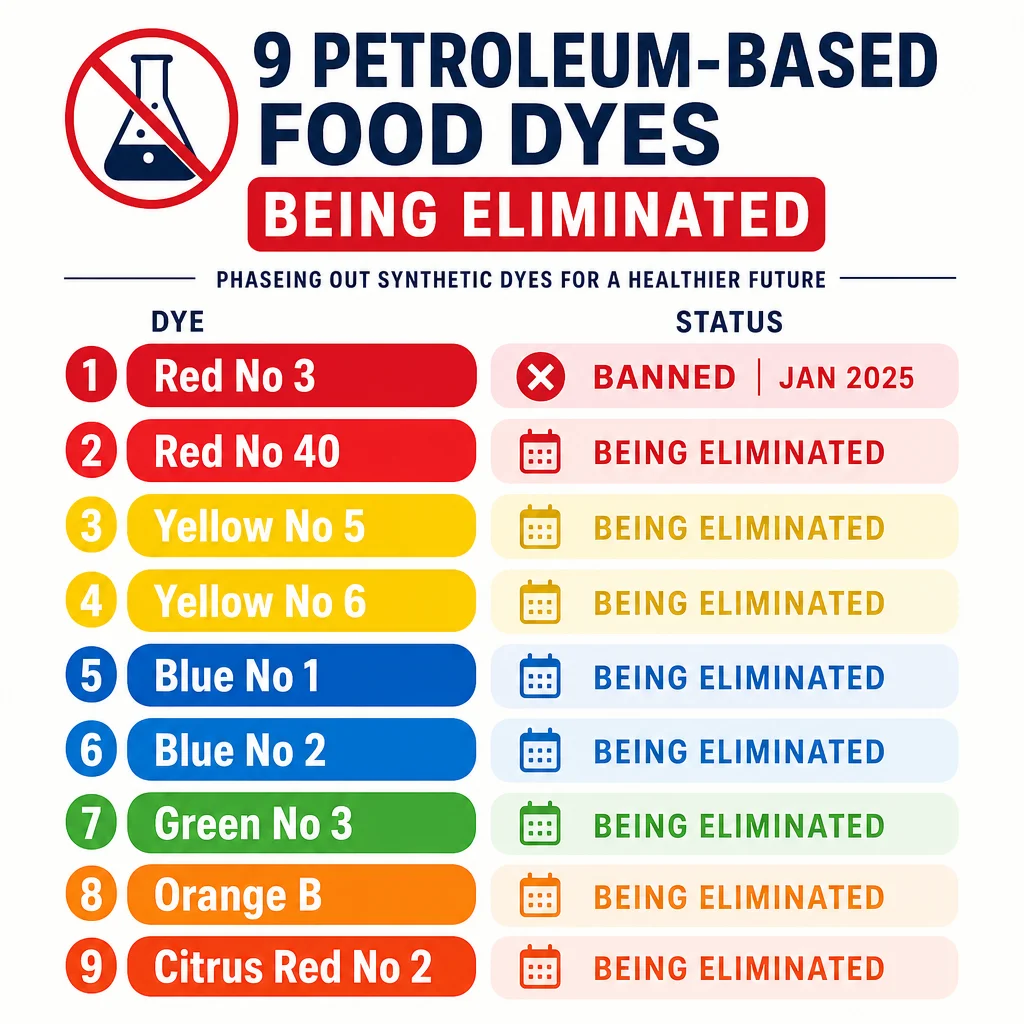
Nine certified colors sit inside the broader federal initiative, but they do not share one legal status.

The FDA announced in April 2025 that it would take the following actions:

  • FD&C Red No. 3: FDA revoked its food authorization in January 2025. Food manufacturers have a January 15, 2027 reformulation deadline.
  • FD&C Red No. 40, Yellow No. 5, Yellow No. 6, Blue No. 1, Blue No. 2, and Green No. 3: FDA is working with industry on voluntary elimination by the end of 2027.
  • Orange B and Citrus Red No. 2: FDA says it is taking regulatory action to remove the authorizations.

These color additives serve appearance and product-identification functions rather than adding nutrients. The important consumer distinction is whether a change is required by a revoked authorization or promised through a voluntary company commitment.

Why Now

The health case against synthetic food dyes has been building for years. Research has linked several of these dyes to behavioral changes in children, particularly hyperactivity, and some animal studies have raised cancer concerns. The EU and Canada long required warning labels on foods containing certain synthetic colors, and California began restricting them in school foods in 2024.

What changed in 2025 was the political will to act at the federal level. Under the Make America Healthy Again initiative, HHS Secretary Robert F. Kennedy Jr. and FDA Commissioner Marty Makary made eliminating petroleum-based dyes a stated priority. Rather than waiting for new legislation, the administration worked with industry to secure voluntary commitments on a compressed timeline.

The consumer pressure was already there. Major retailers reported years of gradual progress reformulating products without synthetic colors before the federal announcement. The 2025 directive accelerated what was already happening.

Who Has Already Acted

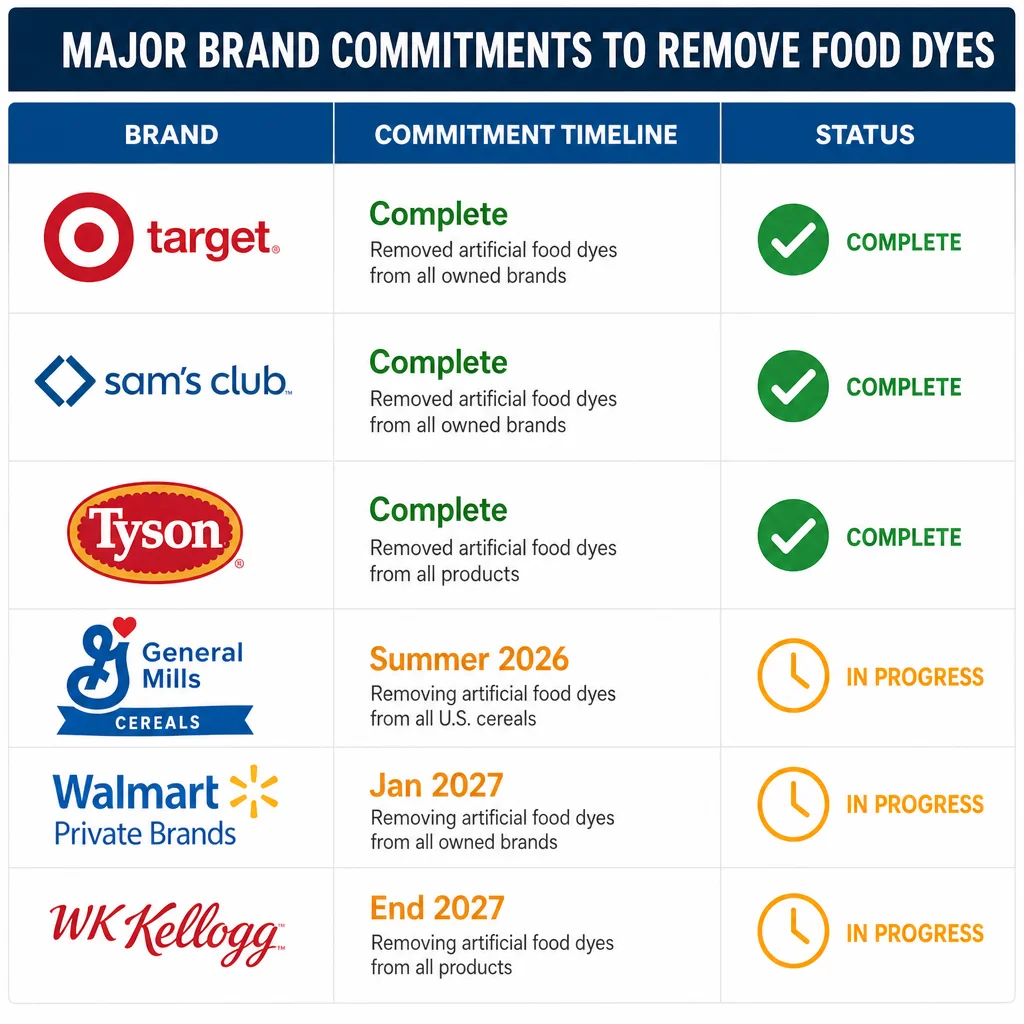
The FDA's industry tracker shows a range of commitment dates. Several commitments are already complete.

Status checked July 29, 2026. The FDA page is current as of June 16, 2026 and also labels its commitment summary as of December 12, 2025, even though individual entries reflect 2026 completions. The status and target dates below follow the current FDA page. Recheck the label and tracker before relying on either.

CompanyProductsStatus
TargetAll cereal sold in stores and onlineComplete (target was end of May 2026)
Sam's ClubAll Member's Mark food and beverage productsComplete
Tyson FoodsJimmy Dean, Hillshire FarmComplete (May 2025)
Nestlé USAAll products in the U.S.Complete (target was mid-2026)
PepsiCoNew Cheetos and Doritos products covered by the pledgeComplete
Whole FoodsAll products (founding policy since 1980)Always been complete
Trader Joe'sAll productsAlways been complete
General MillsAll U.S. cereals and K-12 foods; full U.S. retail portfolioIn progress (targets: summer 2026 and end of 2027)
WalmartAll Great Value, Marketside, Freshness private-label foods plus 30 other ingredientsIn progress (target: January 2027)
WK KelloggFroot Loops, Apple Jacks, Rice Krispies varietiesIn progress (target: end of 2027)
Campbell'sLance Crackers, V8 Splash, regional snack brandsIn progress (target: second half of 2026 fiscal year)
Conagra BrandsBirds Eye, Duncan Hines, Marie Callender's, Slim JimIn progress (target: end of 2027)

The table describes the scope of each listed pledge, not every product a company sells. Complete means the tracker lists that commitment as complete. It does not guarantee that every unrelated brand or product in the company's portfolio is free from certified colors.

The FDA still lists General Mills as In progress even though one target is summer 2026. The table preserves the agency's published status rather than inferring completion from a target date.

What Is Replacing Them

What Is Replacing Them

The natural alternatives now entering the food supply have been used in Europe and Canada for years. Most are derived from fruits, vegetables, and other plant sources.

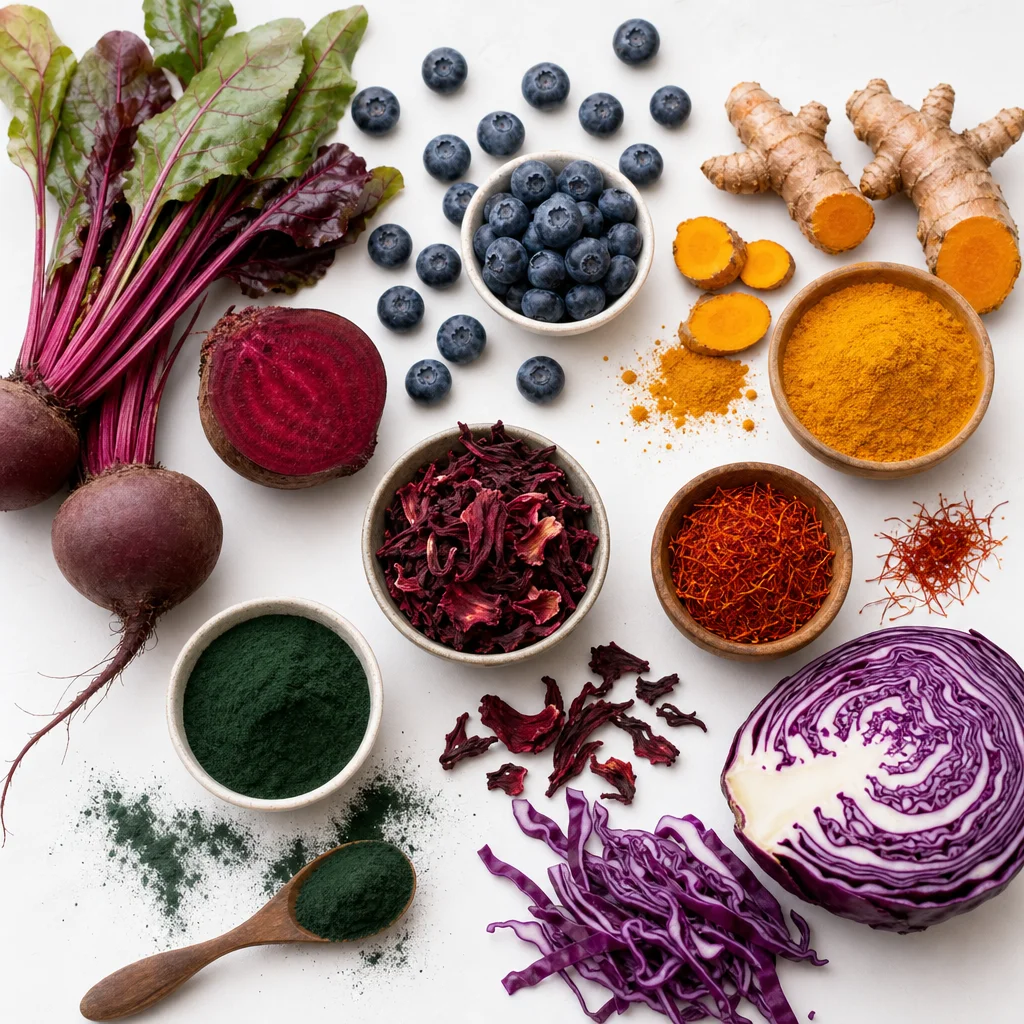
For red and pink shades: Beet juice and beetroot red, hibiscus extract, anthocyanins from cherries and elderberries, and dragon fruit extract. The FDA approved beetroot red as a color additive in February 2026.

For yellow and orange shades: Beta-carotene from carrots and other plants, annatto extract from tropical tree seeds, turmeric, and saffron.

For blue and purple shades: Spirulina extract from algae (already used widely, with expanded approval in February 2026), butterfly pea flower extract, and grape skin extract.

For green shades: Chlorophyll from plants and algae, spirulina.

These sources have been used safely in food for generations, and most carry a profile that nutritionists consider lower risk than synthetic alternatives.

"Natural" Does Not Always Mean Risk-Free

One nuance that often gets lost in coverage of this transition: natural does not mean universally safe for everyone.

Kantha Shelke, a food scientist at Johns Hopkins University, told ABC News in June 2026 that two natural dyes deserve particular attention from sensitive consumers.

Carmine, also called cochineal extract or E120, is derived from crushed female cochineal insects and is widely used as a red dye in yogurts, candies, juices, and some processed meats. Our deep-dive on carmine covers all the product categories and label names where it appears. It can trigger allergic reactions ranging from hives to, in rare cases, anaphylaxis. People with shellfish allergies are sometimes (but not always) reactive to carmine. The FDA has required carmine and cochineal extract to be declared by name on food labels since 2011, specifically because of its allergy potential. Crucially, carmine is not vegan or vegetarian.

Annatto, a yellow-orange dye from the seeds of the Bixa orellana tree, is commonly used in cheeses, snack foods, and butter. It has been associated with cases of chronic urticaria (hives) in sensitive individuals, and some research suggests it may trigger reactions in people with aspirin sensitivity or salicylate intolerance.

Most other natural color alternatives, including beet juice, turmeric, spirulina, saffron, and grape skin extract, are considered low-risk for most people.

The transition away from petroleum-based dyes is a meaningful improvement for public health. But the new ingredient list still warrants reading, particularly for people with food allergies or specific sensitivities.
How to Read Labels During the Transition

How to Read Labels During the Transition

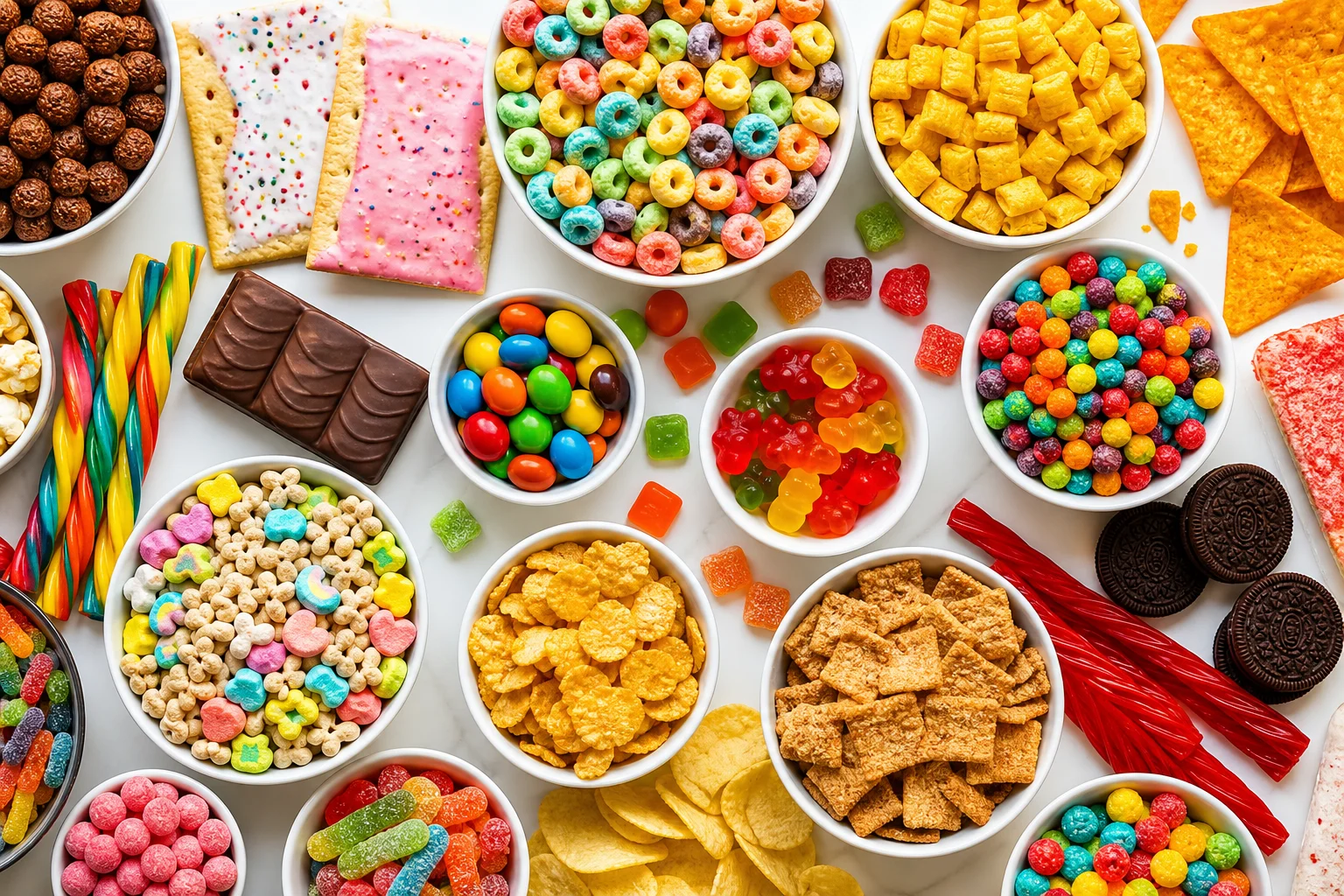
Products are reformulating on different timelines. This means that a product you bought last year may have a different formulation today, and a product that still contains FD&C dyes may be reformulated by next year.

A few practical steps for navigating this period:

Check the ingredient list, not the front of pack. A product marketed as "made with real fruit" or featuring nature imagery may still contain synthetic dyes. The ingredient list is the only reliable source. FD&C dyes will appear by their full name: FD&C Red No. 40, FD&C Yellow No. 5, FD&C Blue No. 1, and so on.

Know the difference between "no artificial colors" claims. As of February 2026, the FDA allows products containing natural dyes to carry a "no artificial colors" claim, even if those natural dyes were not present in earlier formulations. A product labeled "no artificial colors" may still contain carmine, annatto, or other natural dyes that are relevant for people with specific sensitivities.

Watch for carmine and annatto in reformulated products. These are among the most common replacements for Red 40 and Yellow 6, respectively. If you have shellfish allergies, are vegan, or have experienced reactions to natural colorings, carmine and annatto are worth checking explicitly.

Look for the label change itself. Some brands will explicitly note "new recipe" or "now made with natural colors" on reformulated products. Others will simply update the ingredient list without any front-of-pack notice.

What the State Bans Add

Federal action has been supplemented by state legislation. California banned Red 3 statewide (effective 2027) and prohibited six other commonly used dyes from school foods. West Virginia passed a broader ban covering all foods sold in the state, effective January 2028. Twenty-six additional states introduced relevant legislation in 2025 and early 2026.

For shoppers in these states, the timeline for reformulation may be accelerated for products sold locally. Manufacturers generally prefer uniform formulations across all markets rather than maintaining separate state-by-state product lines.

A Major Shift, With Important Caveats

The federal initiative and company commitments are changing many ingredient lists. They also combine binding action, proposed or pending revocations, and voluntary pledges, so FDA phase-out should not be read as one immediate nationwide ban on all six commonly used colors.

The remaining questions include pace, company coverage, enforcement, transparency, and the replacement color sources entering the supply chain.

IngrediCheck scans ingredient lists for FD&C dyes as well as natural color additives like carmine and annatto that carry their own allergy and dietary implications. As products reformulate through 2027, keeping a close eye on ingredient lists is the most reliable way to know exactly what is in the food you are buying.

Next Label Check

Follow the scanner, hub, and ingredient paths connected to this guide

Get the app for clearer label decisions.

Scan labels, see what fits your food notes, and read the why in plain English.

IngrediCheck app