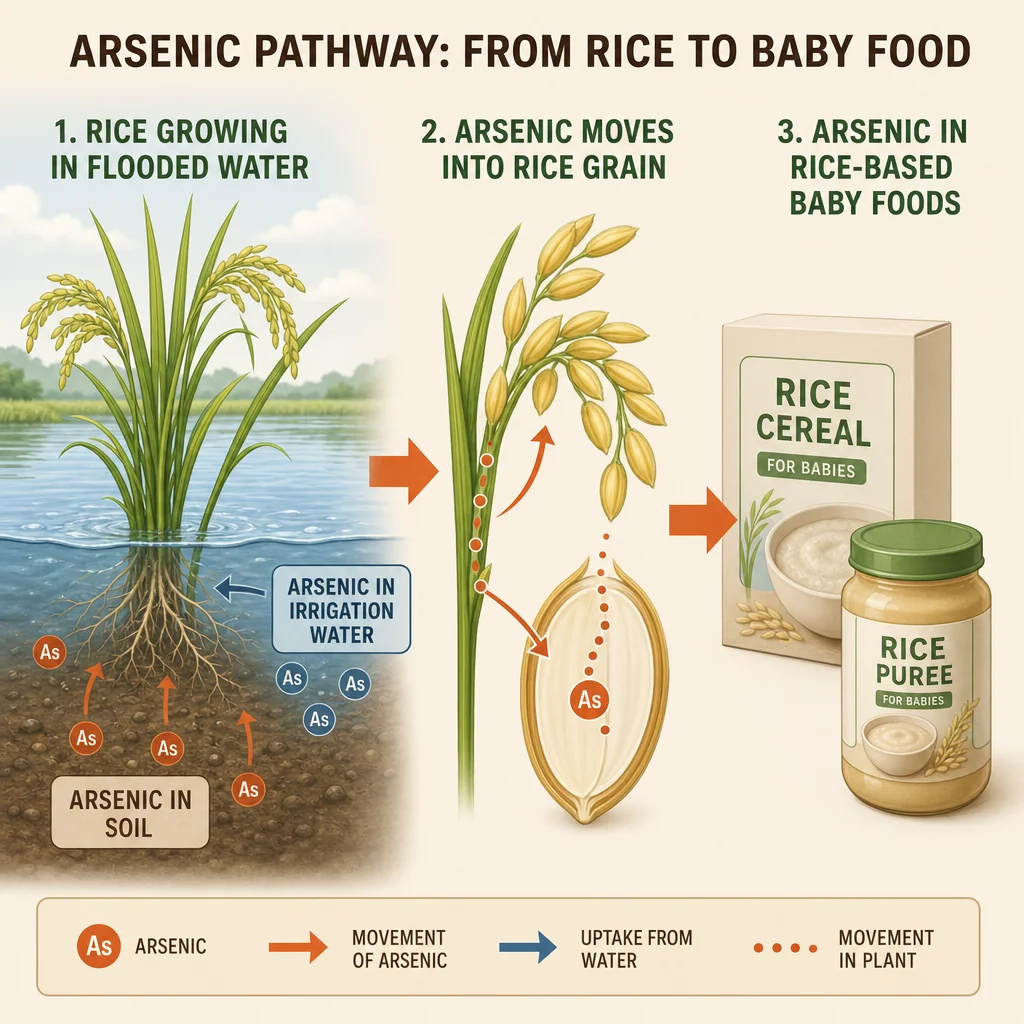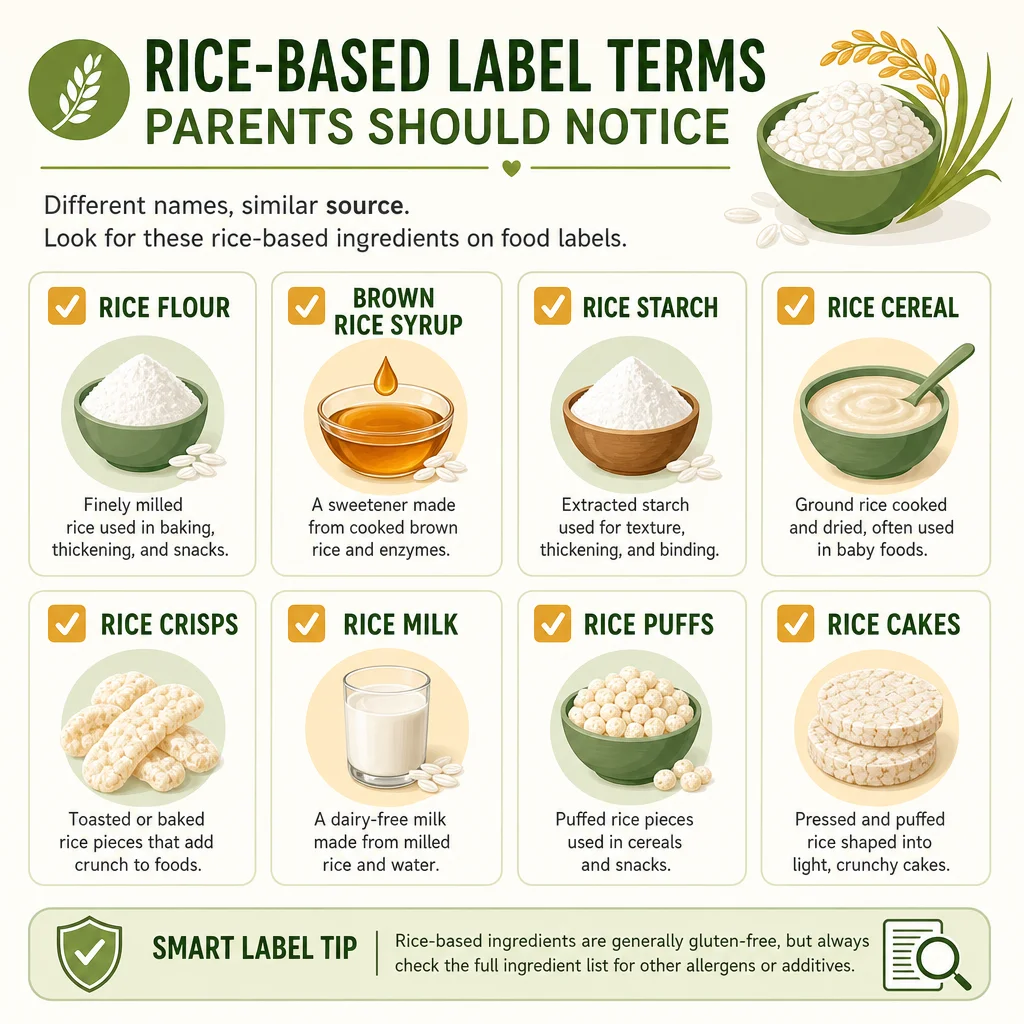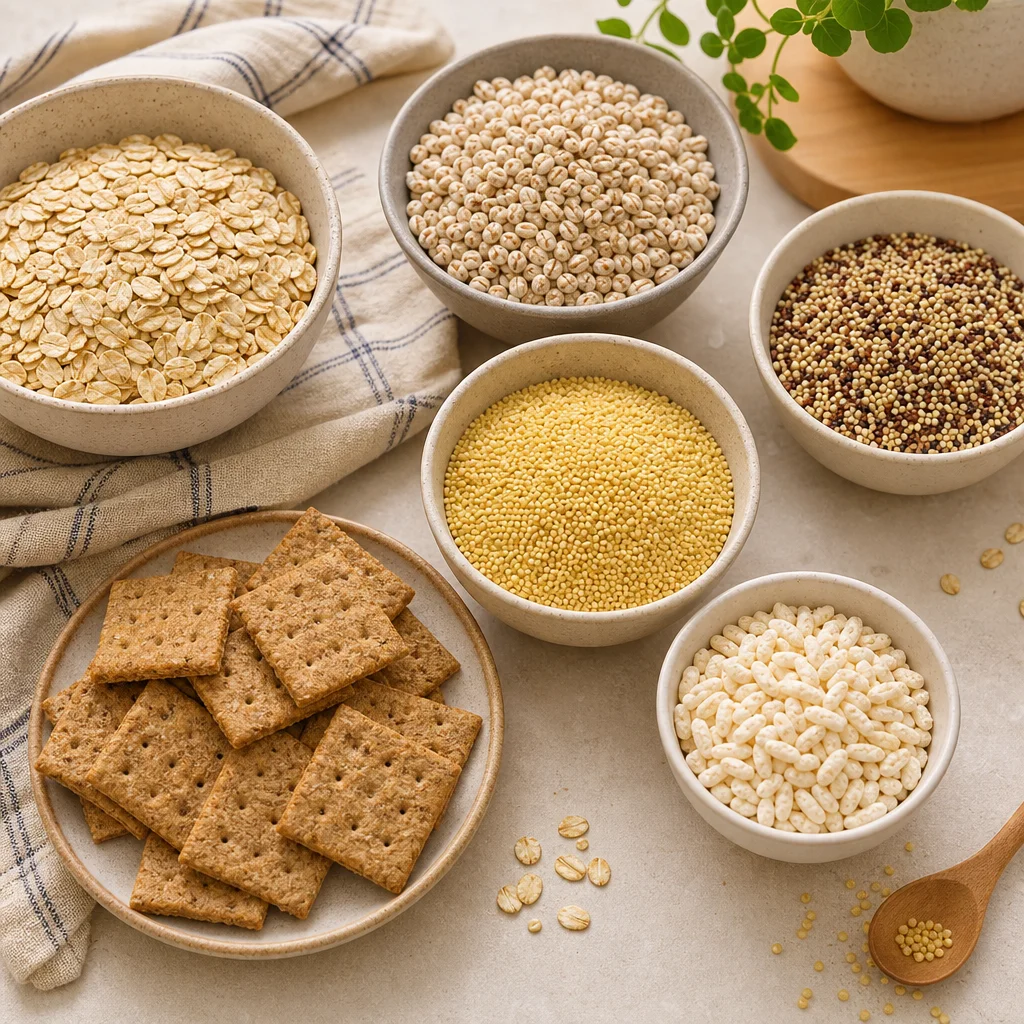
Quick answer: Rice can contain inorganic arsenic because rice plants absorb arsenic from soil and water more readily than many other grains. FDA uses a 100 parts-per-billion action level for inorganic arsenic in infant rice cereal, but a package label does not show the measured amount. Parents can reduce repeated exposure by rotating grains and noticing when rice flour, rice cereal, rice syrup, and rice snacks stack across the day.
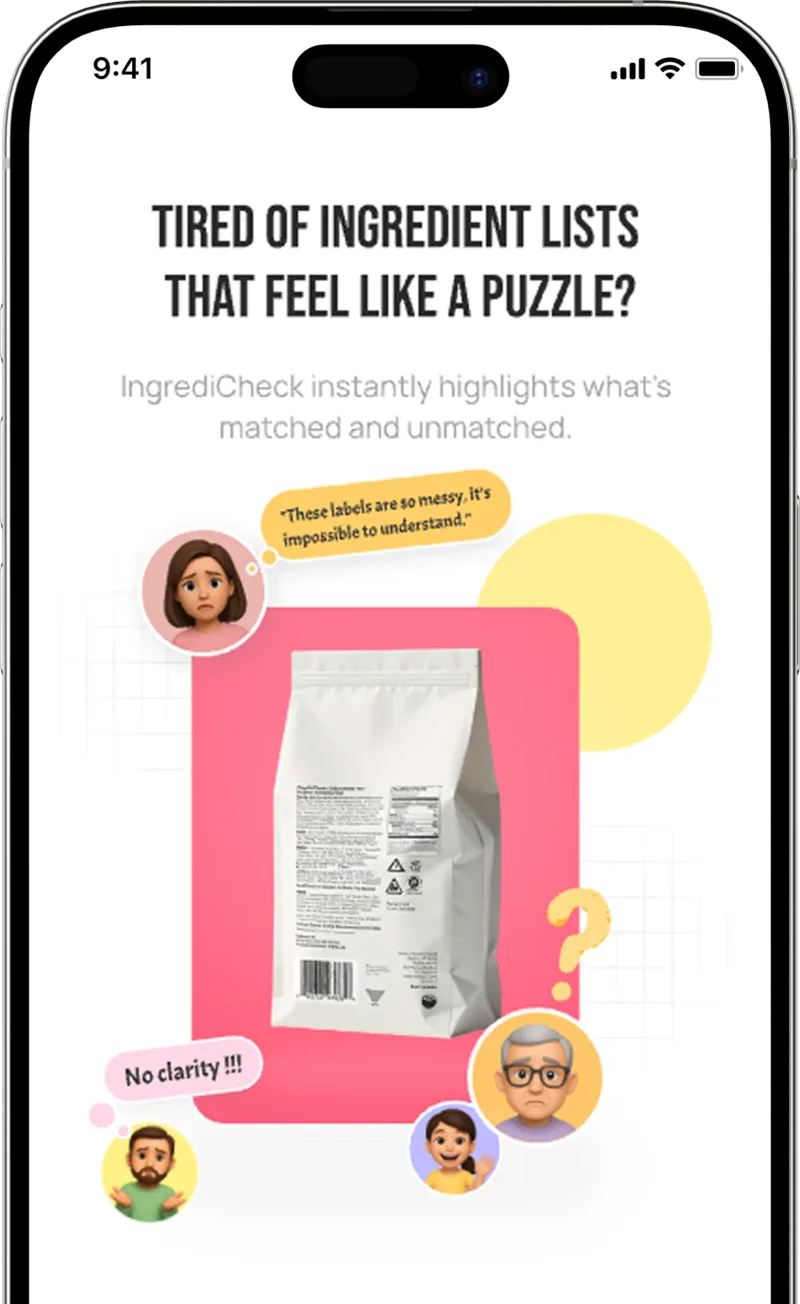
The label can reveal the exposure pattern, not the contaminant concentration. A scanner can flag rice-based ingredients, but only laboratory testing can measure arsenic in a specific product or batch.
This article belongs with the broader Food Contaminants hub, the baby and toddler food scanner guide, and our guide to mercury in seafood. The shared theme is not fear. It is exposure management: noticing patterns early enough to choose a better option.