Ingredient Deep Dives

Maltodextrin: The Hidden Carb in Healthy Packaged Foods

Does maltodextrin count as added sugar? Learn how FDA label rules treat maltodextrin, which foods contain it, and why carb-aware shoppers flag it.

May 13, 2026|9 min read
By Sanket Patel|Updated 2026-05-20|8 sources|Editorial standards
Maltodextrin: The Hidden Carb in Healthy Packaged Foods

Maltodextrin is easy to miss because it does not sound like sugar. It sounds technical, bland, and harmless. That is part of why it shows up in so many products marketed as healthy, sporty, sugar-free, light, protein-rich, or keto-adjacent.

The better way to think about maltodextrin is this: it is a starch-derived, digestible carbohydrate used by food manufacturers for texture, bulking, powder flow, mouthfeel, sweetness systems, and fast energy. It is not automatically dangerous, but it is absolutely worth understanding if you track sugar, carbs, blood glucose, corn-derived ingredients, or ultra-processed formulation.

Quick Answer

Maltodextrin is a starch-derived carbohydrate, not table sugar. The FDA defines it as a nonsweet nutritive saccharide polymer made from partially hydrolyzed starch. On a U.S. Nutrition Facts label, the cleanest read is to check three places together: Total Carbohydrate, Added Sugars, and the ingredient list.

The added-sugar question is narrower than many shopping guides make it sound. FDA guidance says that when maltodextrin or similar ingredients made through controlled hydrolysis contribute mono- and disaccharides, those sugars need to be counted in Added Sugars when the ingredient is added during processing. That does not mean every gram of maltodextrin becomes Added Sugars. The longer carbohydrate chains still matter because they sit in the broader carbohydrate picture.

Maltodextrin is not broadly banned in the U.S. or the EU. The practical label question is whether it fits your personal rule for carbs, keto, blood sugar review, corn-source review, or clean-label shopping.

What Maltodextrin Is

What Maltodextrin Is

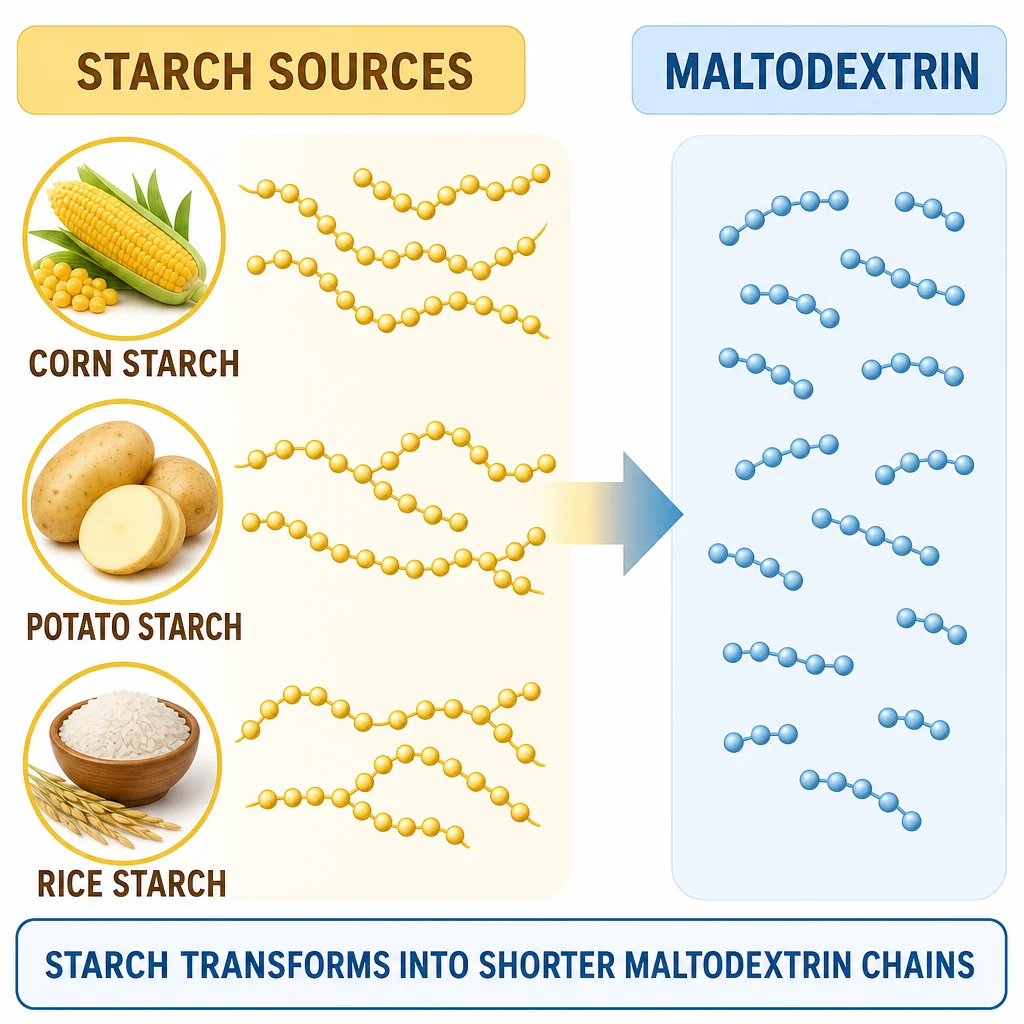
The FDA regulation at 21 CFR 184.1444 describes maltodextrin as a nonsweet nutritive saccharide polymer made of D-glucose units, prepared by partial hydrolysis of corn starch, potato starch, or rice starch with safe and suitable acids and enzymes.

That sentence has three important shopper takeaways.

First, maltodextrin is carbohydrate. It is not a zero-calorie sweetener.

Second, it is starch-derived. Corn is a common source, but the regulation also covers potato and rice starch.

Third, it is nonsweet or only mildly sweet compared with ordinary sugars. That makes it easy to use in products that do not taste obviously sugary.

Does Maltodextrin Count as Added Sugar on FDA Labels?

Sometimes part of it does, but the full answer is more precise than "maltodextrin equals sugar."

Under 21 CFR 101.9, Added Sugars include free mono- and disaccharides added during processing, sugars packaged as sweeteners, sugars from syrups and honey, and certain sugars from concentrated fruit or vegetable juices. FDA's final Nutrition and Supplement Facts label Q&A then addresses hydrolyzed ingredients directly.

The guidance says maltodextrins are ingredients with a dextrose equivalent below 20 and that different maltodextrins can contain different amounts of mono- and disaccharides. It also says that when an ingredient containing mono- and disaccharides created through controlled hydrolysis, including maltodextrin, is added to a food during processing, those mono- and disaccharides need to be declared as Added Sugars.

For shoppers, that creates a practical three-part check:

Label areaWhat it can tell you
Total CarbohydrateThe broader carbohydrate load per serving, including carbohydrate that is not shown as sugar
Total SugarsMono- and disaccharides present in the finished food
Added SugarsSugars added directly or contributed by qualifying ingredients and processes, including the mono- and disaccharide portion from some controlled-hydrolysis ingredients
Ingredient listWhether maltodextrin appears at all, and where it sits relative to other ingredients

This is why a product can deserve a closer carb review even when the front label says "sugar free" or "no added sugar." The legal label may be accurate, but your personal rule may be stricter than the marketing claim.
Why It Appears in So Many Products

Maltodextrin solves practical manufacturing problems. It can help with:

  • bulking powdered sweetener blends
  • carrying flavors
  • improving texture
  • thickening sauces and soups
  • adding body to low-fat foods
  • improving powder flow in drink mixes
  • supporting quick carbohydrate delivery in sports products
  • smoothing protein powders and meal replacements

Maltodextrin is not limited to junk food. It often appears in products with health-forward packaging.

Foods and Products That Commonly Contain Maltodextrin

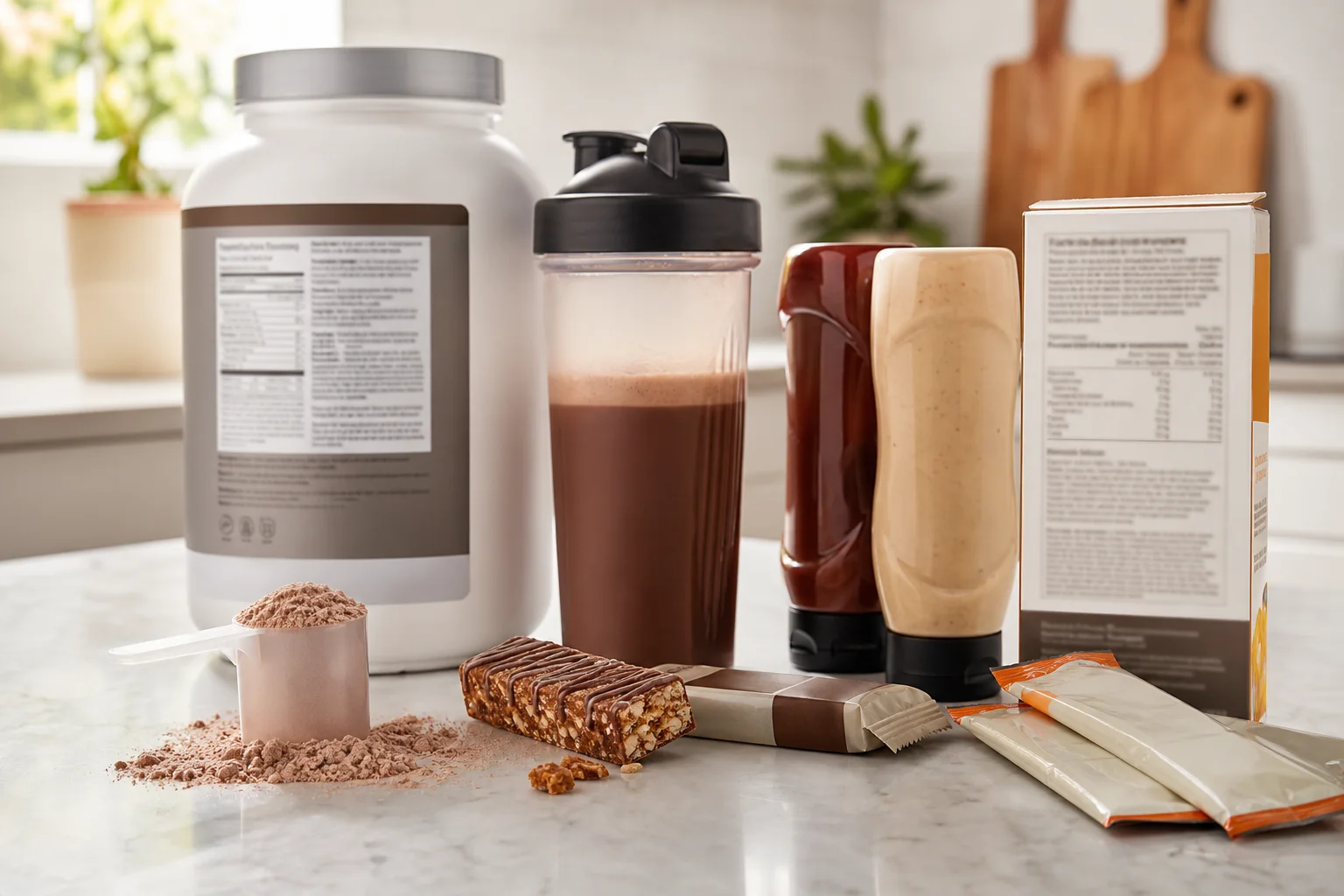
If you are searching for foods with maltodextrin, start with products where manufacturers need powder flow, bulk, texture, or quick-digesting carbohydrate.

Product typeWhy maltodextrin may be usedLabel-reading note
Protein powders and meal replacementsImproves powder handling, body, and mouthfeelCheck Total Carbohydrate, not just protein grams
Electrolyte and drink mixesCarries flavors and adds powder bulkSmall scoops can hide meaningful carbohydrate over multiple servings
Sports gels and endurance productsSupplies quick carbohydrateThis may be intentional for athletes, not a defect
Powdered sweetener packetsBulks high-intensity sweeteners that would otherwise be tiny dosesA "zero calorie" serving can still matter if you use many packets
Seasoning blends and sauce packetsCarries flavors, improves flow, and adds bodyServing sizes may be smaller than real use
Instant soups, gravies, and saucesThickens and rounds textureLook near starches, gums, and flavor systems
Low-sugar desserts and snack barsHelps replace texture or bulk removed with sugar reductionSugar claims do not equal low carb
Frozen meals and prepared foodsSupports texture and sauce stabilityCompare similar products when maltodextrin is not essential

The position in the ingredient list matters. A tiny amount in a seasoning dust is different from a powder or drink mix where maltodextrin is one of the first ingredients.

Maltodextrin rarely appears alone in the kind of products shoppers worry about. It often sits near other carbohydrate, starch, or sweetener terms.

Useful saved-rule neighbors include:

  • dextrose
  • dextrin
  • glucose syrup
  • corn syrup
  • modified food starch
  • corn starch
  • rice syrup
  • tapioca starch
  • potato starch
  • maltitol
  • polydextrose
  • soluble corn fiber

These ingredients are not interchangeable, and they do not all mean the same thing. The reason to group them in a scanner is practical: they often appear in the same low-sugar, low-fat, powdered, or keto-adjacent products where shoppers want a closer carbohydrate review.

Why Sugar-Free Shoppers Still Flag It

Maltodextrin is not the same as table sugar, but it can still matter for sugar-aware shoppers.

The FDA Nutrition Facts label separates Total Sugars from Added Sugars, and 21 CFR 101.9 describes how added sugars and sugar alcohols are declared. Maltodextrin is confusing because the ingredient name does not look like a familiar sugar word, while the ingredient can still add digestible carbohydrate and may contribute some sugars created through controlled hydrolysis.

That is why the phrase hidden sugar is common in consumer searches, even though a more precise phrase is hidden fast-digesting carb.

If a product says sugar free but contains maltodextrin, the key question is not did the label break the law? The better question is does this ingredient fit my carb or blood sugar rule?

The answer depends on the person.

Why Keto Shoppers Care

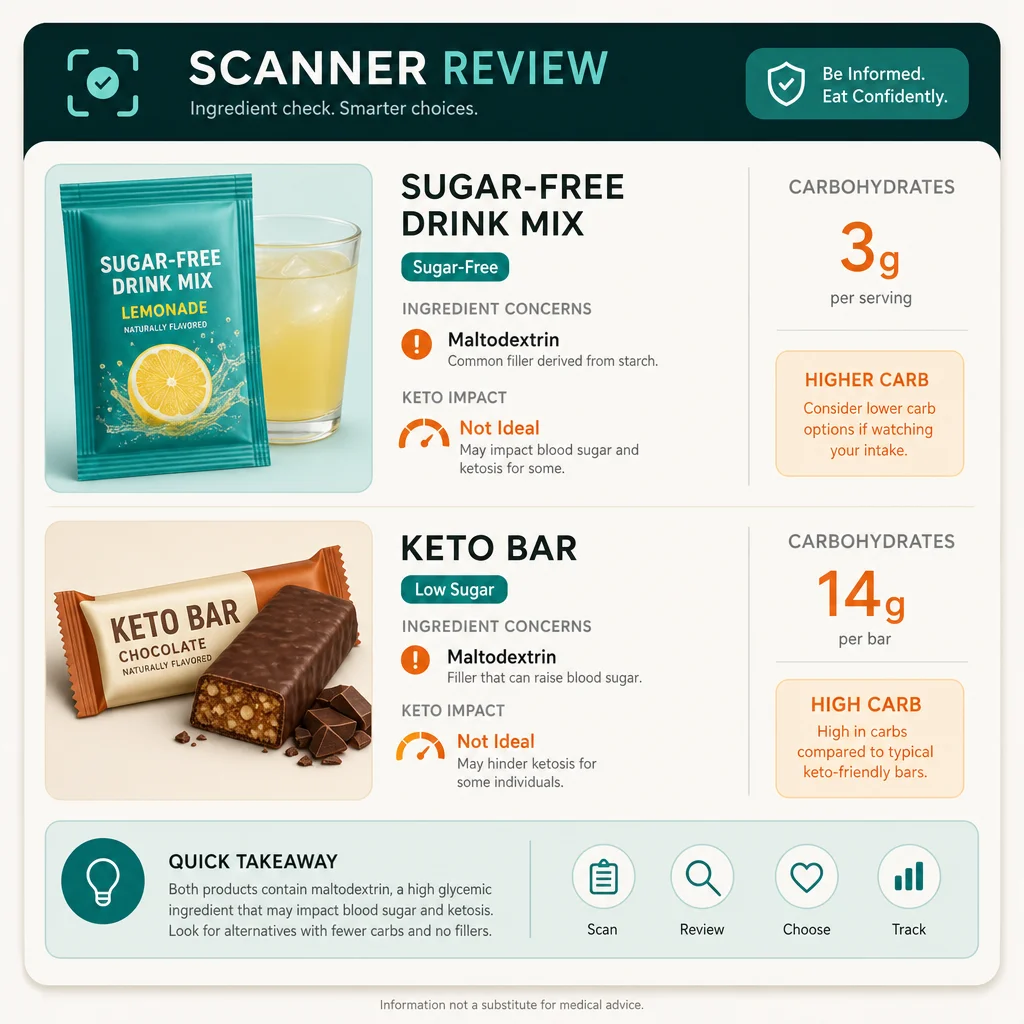
Keto shoppers usually care about total carbohydrate first. Because maltodextrin is a digestible carbohydrate, many keto rule sets flag it even when the front of the package says zero sugar, low sugar, or keto friendly.

That is why the keto food scanner app guide treats maltodextrin as a red-flag ingredient for review. It may appear in products where the main marketing claim is about sugar, not total carbohydrate.

Examples:

  • powdered drink mixes bulked with maltodextrin
  • sweetener packets where maltodextrin carries a high-intensity sweetener
  • low-sugar bars using starch-derived binders
  • sauces and dressings with small serving sizes
  • seasoning blends used in larger real-world portions

The label may still be accurate. The problem is that the shopper's goal is stricter than the front-of-package claim.

Why Corn-Free Shoppers Care

Maltodextrin can be made from corn starch, potato starch, or rice starch. U.S. labels may not always make the source obvious.

For people avoiding corn, that creates a source question. Some shoppers only avoid obvious corn terms. Others want to flag maltodextrin every time unless the manufacturer confirms a non-corn source.

The corn-free food scanner app guide frames this as a saved-rule issue. A scanner should not pretend to know the source when the package does not say. It should flag the term and let the user decide whether source confirmation is needed.

Maltodextrin Is Allowed, but That Does Not End the Label Question

The review article on digestible maltodextrins notes that maltodextrins are regulated in the United States as GRAS substances under FDA's Code of Federal Regulations. The eCFR also says maltodextrin is used in food with no limitation other than current good manufacturing practice.

That legal status is important. It keeps the article grounded. Maltodextrin is not a banned ingredient.

But allowed does not mean irrelevant. A label-conscious shopper can still decide to flag it because it conflicts with a specific rule:

  • low carb
  • keto
  • diabetes-aware label review
  • corn-free
  • clean-label preference
  • ultra-processed food reduction

Is Maltodextrin Banned in Europe?

Is Maltodextrin Banned in Europe?

No broad EU ban on maltodextrin exists. This is not the same kind of regulatory story as titanium dioxide, potassium bromate, or other additives that appear in "banned in Europe" searches.

The EU's Food Information to Consumers regulation is still useful for understanding the label distinction. It requires mandatory nutrition declarations to include carbohydrate and sugars, defines carbohydrate as carbohydrate metabolised by humans, and defines sugars as monosaccharides and disaccharides. In plain English, that means the EU label framework also separates the broader carbohydrate line from the narrower sugars line.

For EU shoppers, the practical question is the same: is maltodextrin present, how high is it in the ingredient list, and does the product's carbohydrate or sugars line fit your goal?

How IngrediCheck Helps

IngrediCheck can make maltodextrin easier to manage because the app checks labels against saved rules.

Useful rules might include:

  • flag maltodextrin
  • flag starch-derived carbs
  • flag maltodextrin for corn-source review
  • flag dextrose, glucose syrup, and maltodextrin
  • flag sugar-free products that still contain fast carbs

Then one scan can surface the label term, explain why it matters, and let you compare alternatives.

For broader scanner context, read the ingredient checker app guide, the sugar-free and no added sugar scanner, and the ingredient checker and food scanner guides hub.

How to Identify Maltodextrin in Food

Use this label routine:

  1. Look at serving size.
  2. Check Total Carbohydrate before focusing on sugar claims.
  3. Read Added Sugars, but remember that carbohydrate impact is broader than Added Sugars.
  4. Search the ingredient list for maltodextrin, dextrose, glucose syrup, and starches.
  5. If corn avoidance matters, decide whether manufacturer confirmation is needed.
  6. Compare similar products when the ingredient is not essential.

This approach avoids scare language and still respects the reason shoppers search for maltodextrin in the first place.

Try It on a Protein Powder or Drink Mix

Maltodextrin is easiest to spot once you start looking at powders, bars, and reduced-sugar products. IngrediCheck helps you scan the label, flag maltodextrin when it appears, and decide whether the product fits your personal carb, corn-free, or clean-label rules.

Next Label Check

Follow the scanner, hub, and ingredient paths connected to this guide

Frequently Asked Questions

Is maltodextrin sugar?

Maltodextrin is not table sugar. FDA regulations describe it as a nonsweet nutritive saccharide polymer made by partial hydrolysis of starch, but it is still a digestible carbohydrate that can matter for carb tracking.

Does maltodextrin count as added sugar on FDA labels?

Not every gram of maltodextrin is labeled as added sugar. FDA guidance says the mono- and disaccharides contributed by maltodextrin or similar controlled-hydrolysis ingredients need to be declared as added sugars when the ingredient is added to food during processing.

What foods commonly contain maltodextrin?

Maltodextrin commonly appears in protein powders, electrolyte mixes, meal replacements, powdered sweeteners, seasoning blends, sauces, instant soups, low-sugar desserts, snack bars, and sports nutrition products.

Why do keto shoppers flag maltodextrin?

Keto shoppers often flag maltodextrin because it is a starch-derived carbohydrate that can add fast-digesting carbs even when a product is marketed as low sugar or reduced sugar.

Is maltodextrin banned in Europe?

No broad EU ban on maltodextrin exists. It is better understood as a carbohydrate-labeling and formulation question than as a banned-additive story.

Is maltodextrin always unsafe?

No. Maltodextrin is allowed as a food ingredient. The practical question is whether it fits your personal carbohydrate, blood sugar, corn-free, or clean-label rules.

Get the app for clearer label decisions.

Scan labels, see what fits your food notes, and read the why in plain English.

IngrediCheck app